Blog
Honda vs Yamaha Outboard Motors 2026: Which Brand is Best for Your Boat?
Honda vs Yamaha Outboard Motors 2026:
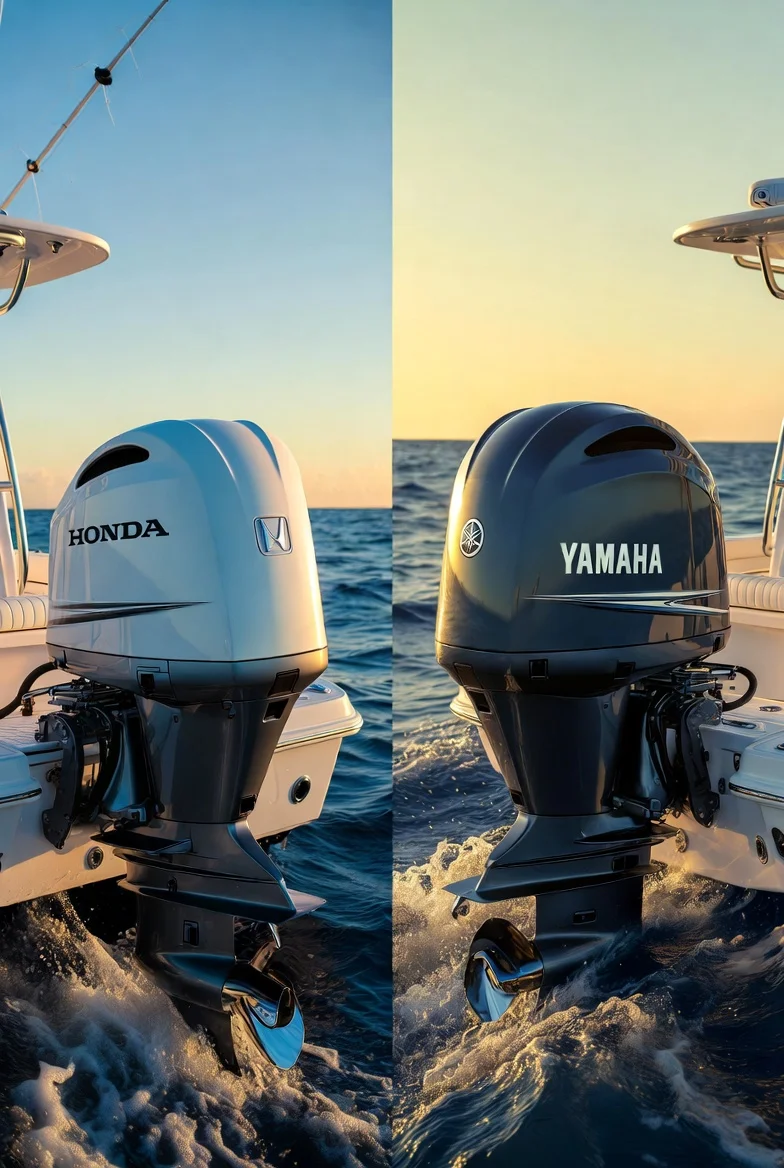
When it’s time to repower your boat, the choice often comes down to two industry leaders: Honda and Yamaha. Both brands dominate the used and refurbished outboard motor market for good reason — they offer exceptional reliability, advanced engineering, and strong resale value. But which one is right for your boating style?
In this detailed 2026 buyer’s guide, we compare Honda and Yamaha outboard motors head-to-head across performance, reliability, fuel efficiency, noise levels, maintenance, and real-world applications. Whether you fish inshore, cruise offshore, or need a portable engine for your tender, you’ll find clear recommendations plus current inventory highlights from Outboard Repower Shop.
Why Honda and Yamaha Dominate the Used Outboard Market
Both manufacturers produce high-quality 4-stroke engines that consistently rank at the top in consumer reports and long-term owner surveys. Their used and refurbished models represent some of the best value in marine propulsion today, often delivering 90%+ of new performance at significantly lower prices.
Shared Strengths:
- Excellent durability and corrosion resistance
- Advanced fuel injection systems
- Strong dealer/technician support networks
- Good parts availability
- Strong warranties when purchased from reputable specialists
Head-to-Head Comparison
1. Reliability & Longevity Yamaha edges out slightly for overall toughness in harsh saltwater conditions and high-hour commercial use. Their engines are legendary for running reliably well past 2,000–3,000 hours with basic maintenance. Honda excels in consistent, trouble-free operation and is often praised for bulletproof electrical systems and build quality.
Winner: Tie — both are exceptionally reliable when properly maintained.
2. Fuel Efficiency Yamaha offers excellent economy across the lineup, especially in their F-series with variable cam timing. Honda is highly competitive, particularly in mid-range models, with smooth power delivery that translates to real-world savings on long trips.
Slight Edge: Suzuki often leads here, but between these two, it’s very close depending on the specific model and RPM range.
3. Noise & Vibration Honda is widely regarded as the quietest outboard on the water. Their engines run exceptionally smoothly, making them ideal for fishing where you don’t want to spook your catch. Yamaha is also quiet but delivers a sportier, more responsive feel.
Winner: Honda for pure stealth and comfort.
4. Performance & Power Delivery Yamaha generally provides stronger acceleration and top-end speed, making it a favorite for center consoles and performance-oriented boaters. Features like Helm Master digital controls integrate seamlessly. Honda offers smooth, linear power that’s predictable and easy to handle.
Winner: Yamaha for sporty performance.
5. Weight & Portability Both brands offer lightweight designs in smaller HP ranges, but Honda’s smaller portables (like the BF series) are particularly easy to maneuver.
6. Maintenance & Ownership Costs Both require similar routine service intervals. Yamaha may have a slight advantage in some regions due to broader aftermarket support, while Honda parts are known for precision fit and longevity.
Best Use Cases & Model Recommendations
For Serious Fishing & Stealth Choose Honda. Recommended:
- Twin Honda BF250 4-Stroke Outboards — Powerful, quiet V6 performance perfect for offshore fishing.
- Single 150HP–225HP models for mid-size boats.
For Versatile Performance & Offshore Use Choose Yamaha. Recommended:
- 2021 Yamaha F50 4-Stroke — Great all-rounder for smaller boats.
- 2017 Yamaha F200 or larger twins for bigger vessels. Browse the full Yamaha Outboard Motors selection.
For Budget-Conscious Buyers Look at well-maintained used examples from either brand in our Used Outboard Motors category — both hold value extremely well.
The Repower Decision Checklist
- What is your primary boating activity? (fishing, cruising, watersports)
- Boat size and transom requirements
- Preference for quiet operation vs raw performance
- Budget including installation and rigging
- Long-term plans (keep the boat 5+ years?)
Our team at Outboard Repower Shop offers expert consultations to match the perfect engine to your boat and usage.
Final Verdict
There is no universal “best” — Honda shines for quiet, refined operation and is often the top choice for dedicated anglers. Yamaha delivers thrilling performance and rugged reliability that appeals to a broader range of boaters. Many owners are happy with either.
The smartest move? Buy from a trusted specialist who thoroughly inspects, tests, and stands behind every engine with warranty and support.
Ready to find your ideal outboard? Explore our current inventory of Honda and Yamaha motors today and contact our marine experts for a personalized recommendation. Free U.S. shipping, professional installation options, and 90-day returns make upgrading stress-free.
Written by the Outboard Repower Shop technical team — certified marine propulsion specialists with over a decade of hands-on repower experience. Updated July 2026.

Aubree Clugston is a senior marine propulsion specialist and certified outboard technician with over 12 years of hands-on experience in marine engine diagnostics, repower conversions, and advanced rigging systems. He has supervised and completed more than 500 outboard repower projects across recreational, commercial, and offshore applications throughout the United States and international markets.
Aubree specializes in modern 4-stroke outboard platforms from leading manufacturers including Honda, Yamaha, Suzuki, and Mercury. His expertise includes digital throttle and shift (DTS) systems, hydraulic steering conversions, marine electrical diagnostics, transom load balancing, fuel system upgrades, and performance propeller selection.
With a strong technical foundation in marine propulsion systems, Aubree follows ABYC marine safety standards and manufacturer installation protocols to ensure compliance, reliability, and long-term operational efficiency. His repower strategies focus on optimizing weight distribution, improving fuel economy, enhancing torque output, and ensuring seamless integration with existing vessel controls.
At Outboard Repower Shop, Aubree leads technical content review, compatibility verification, and product specification validation. Every engine listing, rigging component, and installation guide is reviewed for accuracy, real-world applicability, and performance reliability.
His mission is to provide boat owners with expert-backed guidance, transparent specifications, and confidence when investing in major marine propulsion upgrades.